Container Homes vs Traditional Houses in the UK: Costs, Timelines and Regulations
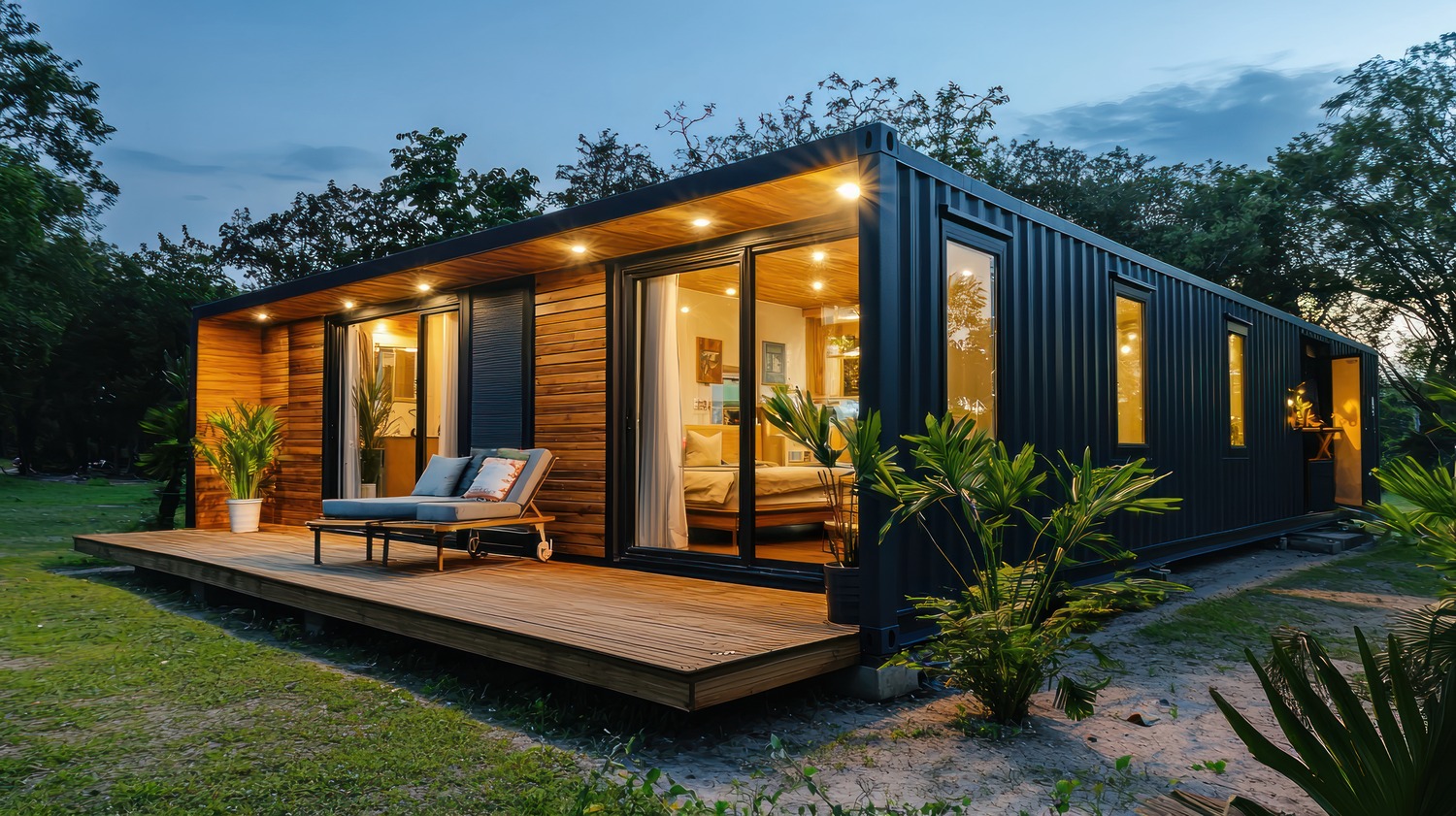
Choosing a new home in Britain is no longer only about style or location. Today, buyers also compare delivery speed, cost control, energy performance, planning complexity, and long-term value. That is why more people researching container homes UK are now placing them directly against conventional brick-and-mortar houses rather than treating them as a niche alternative.
This shift matters. A few years ago, many buyers saw container-based living as unusual or experimental. Now, the conversation is more practical. How much does it cost? How long does it take? What regulations apply? And perhaps most importantly, is it a smarter route than a traditional house for certain buyers, landowners, and investors?
The answer depends on the project, the site, and the buyer’s priorities. For some, a conventional house still makes perfect sense. For others, container homes UK offer a more efficient path to ownership, development, or investment. Understanding the differences is the first step toward making the right decision.
Why this comparison matters now
The UK housing market continues to face pressure from rising build costs, labour shortages, planning delays, and growing expectations around efficiency and quality. In that environment, buyers are becoming more open to modern construction methods that reduce uncertainty and improve speed.
That is one reason why modular homes UK and other off-site systems have moved into the mainstream conversation. Rather than asking whether these homes are “real” homes, buyers are now asking whether they may be better suited to modern conditions than a fully traditional build.
This is also where container homes UK stand out. They appeal to people who want a quicker, more controlled build process without giving up comfort, visual appeal, or long-term usability. For a growing number of clients, the comparison is no longer emotional. It is commercial, practical, and performance-driven.
Cost comparison
Cost is usually the first issue on any buyer’s list. Traditional houses often come with a familiar perception of value, but they can also bring a long list of variable costs. Labour, weather delays, material price changes, site inefficiencies, and programme overruns can all affect the final figure.
By contrast, many container homes UK projects benefit from a more controlled production process. Because significant work is completed off-site, budgeting can be more transparent and less exposed to some of the variables that affect conventional building. This does not mean every project is automatically cheap. It means costs can often be managed with greater predictability.
When buyers search for container homes cost UK, they are usually trying to answer two separate questions. First, what is the starting investment? Second, what value does that investment deliver in terms of time, quality, and certainty? That distinction is important, because the cheapest route on paper is not always the most efficient route in reality.
A traditional house may still be competitive on some sites, especially where standard designs, local teams, and straightforward build conditions are already in place. But container-based construction becomes particularly attractive when buyers want better control over delivery, clearer specification, and reduced exposure to on-site disruption.
The real cost story is broader than build price
A fair comparison must go beyond headline construction numbers. Buyers should also assess:
- Design and engineering costs.
- Groundworks and foundations.
- Utility connections.
- Planning and compliance requirements.
- Interior finish level.
- Programme certainty.
- Long-term running costs.
In many cases, prebuilt homes gain attention because they simplify the path to completion. Even when headline costs are similar to traditional options, the value of a shorter and more predictable programme can be significant. For developers, that can improve cash flow. For private buyers, it can reduce stress, financing pressure, and months of uncertainty.
For example, a landowner deciding between a compact traditional house and a well-designed container-based unit may find that the conventional option appears familiar at first, but the off-site route offers faster occupancy and fewer build-stage surprises. That difference can be commercially meaningful.
Timeline comparison
Timelines are often where the contrast becomes clearest. Traditional houses are heavily dependent on sequencing, weather conditions, subcontractor availability, and site coordination. Even well-managed projects can stretch beyond the original programme.
With container homes UK, much of the construction work is completed in a controlled production environment before the home reaches the site. That can reduce exposure to delays and allow multiple stages to move forward at the same time. Ground preparation can happen while the structure is being manufactured, which improves overall efficiency.
This is one reason buyers comparing pre fabricated homes UK with conventional houses often lean toward modern systems. Speed is not only a convenience. It can affect financing, rental income, project planning, and the buyer’s ability to move forward with confidence.
Of course, timelines are never instant. Design development, approvals, manufacturing, transport, installation, and commissioning still require planning. But compared with a traditional house, the route is often shorter and more structured, especially when the provider has an established system and a clear project process.
Regulations and approvals
One of the biggest myths is that container-based homes avoid the formal requirements that apply to standard housing. They do not. In the UK, container homes UK must still be considered in relation to planning permission, site use, structural performance, insulation, ventilation, fire safety, drainage, and building regulations.
In that sense, container homes and traditional houses share an important reality: both must satisfy legal and technical standards. The difference is not whether regulation applies, but how efficiently the home is designed to meet those requirements from the outset.
A professionally delivered container-based project is usually developed with compliance in mind from the earliest stages. That includes structural calculations, thermal performance, service integration, and specification choices that support approval and practical occupancy. For buyers, this is a major advantage, because it turns an innovative housing concept into a viable, regulation-ready product.
Traditional houses benefit from familiarity in the planning system, but that does not always make them simpler. Complex sites, conservation considerations, drainage constraints, and access limitations can affect both routes. In many cases, the real difference comes down to the quality of the team managing the project rather than the construction method alone.
Design flexibility and everyday living
Some buyers still assume that traditional houses offer more freedom in layout and appearance. In reality, modern container-based design has evolved well beyond that stereotype. Today’s container homes UK can deliver open-plan living, strong natural light, high-spec interiors, attractive external finishes, and carefully tailored layouts for individuals, couples, families, and investors.
This matters because a home must do more than simply comply. It must also feel comfortable, functional, and desirable. Buyers are not only comparing construction systems. They are comparing lifestyles.
At the same time, modular houses and container-based schemes appeal to people who want a modern aesthetic and efficient use of space. A smaller footprint can still feel premium when the design is smart, storage is integrated, and every square metre has a clear purpose.
This is also why modular homes UK often enter the same shortlist. Buyers increasingly compare all factory-led solutions together, asking which option delivers the right balance of design freedom, speed, and budget certainty.
Which option gives better control?
Control is one of the strongest arguments in favour of container-based and modular delivery. Conventional houses are often more exposed to fragmented project management, changing labour conditions, and variable site execution. That does not make them inferior in every case, but it does make them more vulnerable to inconsistency.
By comparison, buyers looking at pre fabricated homes UK or container-led systems often value the discipline of a more standardised process. When more of the home is delivered through structured manufacturing, quality control can improve and project milestones can be clearer.
That is especially important for:
- Private buyers with a fixed budget.
- Investors who need realistic project forecasting.
- Developers working to programme targets.
- Landowners who want less disruption on site.
- Clients entering the build process for the first time.
In simple terms, traditional construction can offer flexibility through custom building on site, while container-based systems often offer control through better process management. For many modern buyers, that trade-off is worth serious attention.
Is traditional construction still the better option for some buyers?
Yes. A traditional house may still be the right choice where the buyer wants a highly bespoke design, has a longer time horizon, is comfortable managing a more open-ended build process, or is developing in a context where conventional architecture is strongly preferred.
There are also locations and project types where a traditional form may align more naturally with local expectations or planning considerations. The point is not that one route replaces the other entirely. It is that the market now has a stronger and more credible alternative than before.
That alternative is particularly appealing when speed, certainty, and modern efficiency matter as much as the final appearance. In those cases, container homes UK can move from “interesting option” to “obvious shortlist”.
Why more leads are moving toward container and modular solutions
Many prospects begin with curiosity and end with a serious enquiry once they understand the comparison properly. That is because the strongest case for container-based housing is not novelty. It is practicality.
Buyers who compare timelines often see the benefit quickly. Buyers who compare risk notice the value of a more controlled process. Buyers who compare lifestyle discover that a well-designed modern home can offer comfort and character without the drawn-out uncertainty of a conventional build.
This is also where prebuilt homes and modular homes UK continue to gain momentum. The market is becoming more educated, and educated buyers make more confident decisions. Once clients understand that container-based housing can be compliant, attractive, comfortable, and commercially sensible, the conversation changes.
Instead of asking, “Why would I choose this?” they start asking, “Why would I wait longer and accept more uncertainty if this route already meets my needs?”
Final thought
The decision between container homes UK and traditional houses is not only about construction method. It is about how the buyer wants the project to perform from day one to completion. Cost matters, but so do timing, predictability, regulation, comfort, and long-term usability.
For many buyers in today’s UK market, container-based living is no longer a secondary idea. It is a serious housing solution that answers real-world pressures more effectively than many expected. Whether the goal is a primary residence, an annexe, a rental unit, or a development opportunity, the value of a faster and more controlled route is becoming harder to ignore.
If the priority is a modern home delivered with clearer planning, stronger cost visibility, and a more efficient path to completion, container-based solutions deserve close consideration. And for many leads comparing options right now, that may be the moment where interest turns into action.