Container Homes vs Traditional Houses in the UK: Costs, Timelines and Regulations
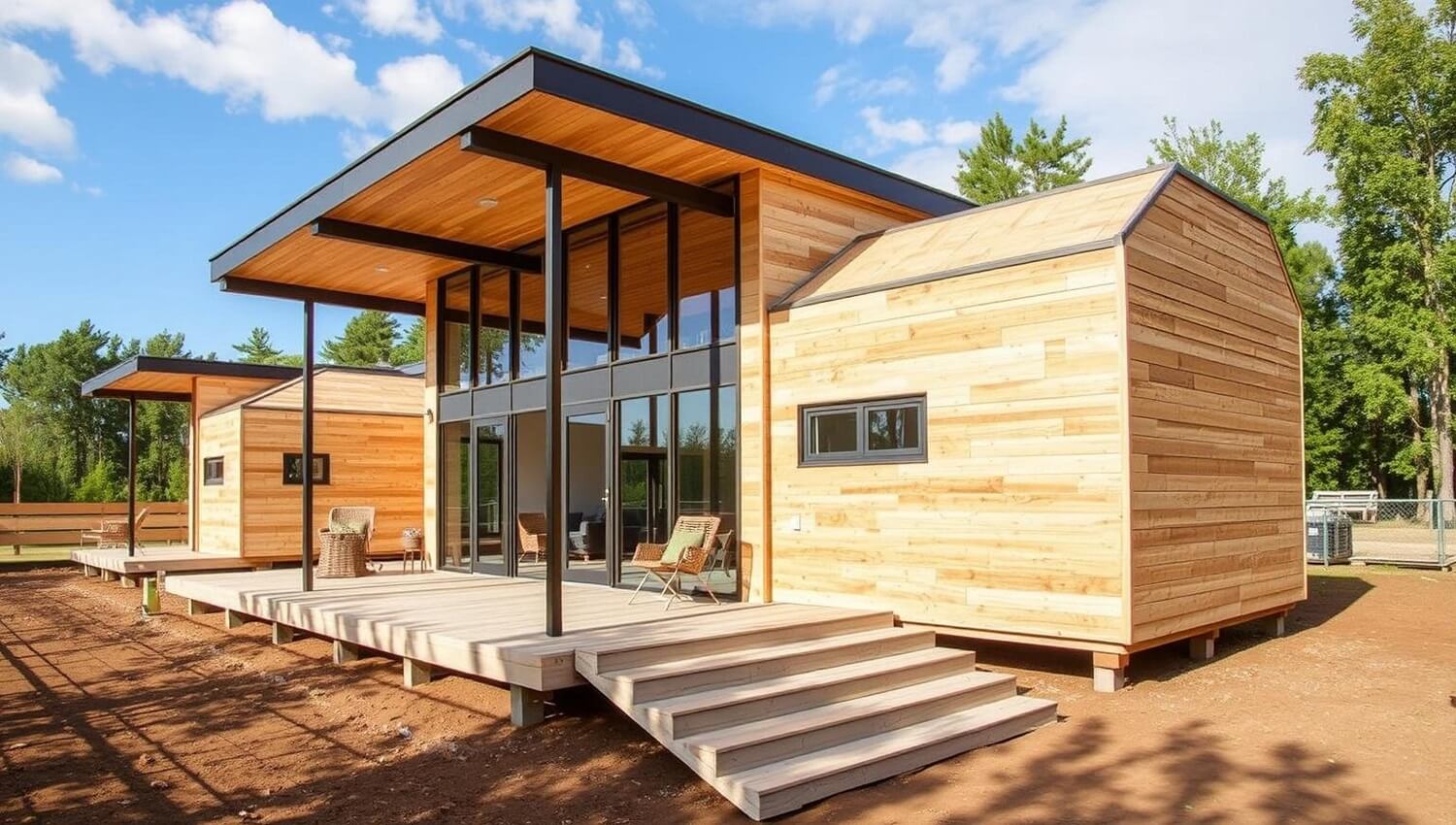
If you’re comparing a brick-and-mortar house with a modern container home in the UK, this guide explains the key differences in cost, speed and legal requirements. For many buyers, container homes UK can be a smart alternative to traditional construction, especially when speed, budget control and a simpler build process matter most.
What Are We Comparing: Container Homes and Traditional Houses
When people compare container homes UK with conventional housing, they are usually comparing two different construction methods rather than two different categories of property. Factory-built modular and container-based homes are typically produced off-site in sections and then delivered for installation, while traditional houses are usually built largely on-site using brick, block or timber frame systems.
In practical terms, both can become full residential homes. The main difference lies in how they are made, how much work happens in the factory, and how much time, labour and coordination is still required on the plot.
Modern Container and Modular Homes
Modern container homes, modular homes UK and other prebuilt homes are often designed as complete residential units rather than improvised conversions. In many cases, the structural frame, insulation, wall systems, windows, doors and a large share of the interior finishing work are prepared before the module even reaches the site.
That is what makes this category appealing to buyers who want a more controlled process. Instead of managing every stage outdoors and in sequence, you can move through design, production and installation in a more structured and efficient way. For buyers exploring practical solutions, Home-Containers offers living containers and modular homes designed to simplify this journey.
Conventional Brick-and-Mortar Builds
A traditional house usually offers greater freedom in terms of bespoke design, materials and architectural complexity. For some buyers, that flexibility is a major advantage, especially when the goal is a large custom home or a highly individual design.
At the same time, conventional builds often involve more stages on-site, more contractor coordination and more variables that can affect the final budget and timeline. Weather, labour availability, sequencing issues and scope changes can all have a bigger impact when the project depends heavily on work carried out directly on the land.
Cost Comparison: Container Homes vs Traditional Houses
For many buyers, cost is the first major decision point. In broad terms, container homes cost UK can often be more predictable than the cost of a traditional build because a large proportion of the project is standardised and priced earlier in the process.
That does not mean every modular home is automatically cheaper than every traditional house. Size, finish standard, transport, foundations, utility connections and site access all matter. Still, pre fabricated homes UK often appeal to buyers because they reduce uncertainty and make it easier to compare one option with another.
Upfront Construction Costs
One of the biggest differences is how the initial construction cost is distributed. With a traditional house, much of the cost builds up gradually through labour, materials, site works and changing decisions during the build.
With modular or container-based construction, more of the project is defined earlier. That can make quotes easier to understand and easier to control. With Home-Containers, the structure, insulation, windows, doors and basic finishes are prepared in-factory, so the quote covers most of what is needed for a move-in-ready unit.
This is one reason why buyers searching for container homes vs traditional houses are often not only asking which is cheaper, but which is easier to budget for. In many real-life situations, predictability matters just as much as the final headline number.
Operating and Maintenance Costs
Long-term cost is not only about the build itself. It also includes heating, maintenance and how well the home performs during different seasons in the UK.
A well-designed modular home can be highly efficient when insulation, airtightness and ventilation are properly considered. That means a professionally designed container or modular home can offer strong everyday performance rather than only a visually attractive concept.
Traditional houses can also perform very well, but their efficiency depends heavily on the design, materials and standard of workmanship. Home-Containers can advise customers on insulation levels and heating options that suit the UK climate.
Hidden and Site-Related Costs
This is often where the comparison becomes more realistic. A traditional home may involve a longer on-site process, including excavation, wet trades, material deliveries, contractor coordination and more opportunities for delays or changes.
A container home can simplify some of that, especially where the main structure arrives largely complete. However, site preparation still matters. Groundworks, delivery access, utility connections, drainage and external finishing should still be included in the overall project budget.
So while container homes cost UK can often look attractive, the right comparison is never just the shell of the building. It is the full project cost, including everything that has to happen on the plot before and after installation.
Timelines: How Fast Can You Move In?
Time is one of the clearest advantages of modular construction. Because modular homes are manufactured off-site and then installed on the plot, the amount of time spent building outdoors is usually much shorter than with a conventional house.
For buyers who need a home quickly, that difference can be decisive. Instead of waiting through a long site build, they move through a process where production and site preparation can happen alongside each other.
Typical Timeline for a Container Home Project
A typical modular project usually follows a clear sequence: consultation, design or layout selection, order confirmation, factory production, delivery, installation and final site works. Because much of the construction happens before the unit reaches the plot, the process often feels more streamlined and easier to manage.
This is especially relevant for buyers who want to avoid a long building period. For those who want to shorten the process even more, homes available now can be an attractive option.
In simple terms, traditional builds often mean many months of visible activity on-site, while modular projects move much of that effort into a factory setting and reduce the time spent waiting for the home to take shape outdoors.
Typical Timeline for a Traditional Build
A conventional house usually moves through a longer chain of stages: design, permissions, foundations, structure, roofing, first fix, second fix and final finishing. Even when everything goes smoothly, this can be a lengthy process.
The challenge is not only the duration itself, but also the number of variables involved. Poor weather, material delays, gaps between trades and unexpected site problems can all affect progress. That does not mean traditional houses are the wrong choice, but it does mean the process is often less compact and less predictable.
Regulations and Planning: Both Must Follow UK Rules
One of the biggest misconceptions in this market is that a container home somehow sits outside normal housing rules. In reality, both modular homes and traditional houses usually have to follow the same wider UK framework for planning and building standards when intended for permanent residential use.
That means both approaches must be taken seriously from a legal and technical perspective. A container-based house is still a house if it is meant for long-term living, and it must perform like one.
Planning Permission Basics for Container Homes
In the UK, planning permission is often required when a unit is intended as a permanent dwelling, when utility connections are involved, when land use changes, or when the site is subject to local planning constraints.
The key point is simple: container homes are not a shortcut around planning. They may offer a more efficient route to building, but they still need to fit the rules that apply to residential development.
Building Regulations – No Shortcuts
The same principle applies to building regulations. A container home used for living must address structure, insulation, ventilation and fire safety in the same way as any other home.
This is one area where factory-built systems can have a real advantage. Standardised production makes it easier to repeat the same quality benchmarks across multiple units. Home-Containers designs modular units to help customers meet UK building standards, from structural strength to insulation performance.
When a Container Home Makes More Sense than a Traditional House
Not every buyer needs the same type of home, and that is exactly why this comparison matters. A traditional house can still be the better route for large custom residences, highly complex architectural concepts or projects where complete design freedom is the highest priority.
But for many buyers, container homes UK are the more practical answer. They make particular sense when the goal is a faster build, a clearer budget, a compact yet complete home, or a project that benefits from off-site manufacturing and shorter installation time.
Use Cases for Container Homes in the UK
Container and modular homes are especially well suited to:
- Holiday lets and short-stay accommodation.
- Garden annexes for family members or independent living.
- First homes on smaller plots.
- Infill developments where efficiency matters.
- Off-grid or low-impact retreats
- Buyers who want a complete, modern home without a long traditional build.
These are exactly the kinds of use cases where container homes, modular houses and prebuilt homes stand out. Home-Containers can support buyers looking for practical, attractive and efficient solutions across these categories.
How to Decide and Next Steps with Home-Containers
If you are still weighing up container homes vs traditional houses, the best question is not which option is universally better. The better question is which option fits your land, timeline, budget and expectations more closely.
Choose a traditional house if you want a highly bespoke build, a complex architectural brief or a very large-scale residence with maximum design freedom. Choose a container or modular home if you value speed, clarity, efficiency and a more controlled route to a finished property.
For many buyers, that is where the modular route becomes the more sensible one. It is not the right answer for every site or every ambition, but it is a very strong option for a large group of modern UK customers who want a realistic, attractive and well-organised alternative to conventional construction.
If you already have a plot, a rough budget or even a simple site plan, the next step is to discuss the project with Home-Containers and find out whether a container home is the right fit for your needs.
FAQ
1. Are container homes cheaper than traditional houses in the UK?
Container homes can often offer better budget control and a more predictable cost structure, but the final price depends on size, specification, transport, foundations and site works.
2. Do container homes need planning permission in the UK?
In many cases, yes. If the home is intended for permanent residential use or involves a change in land use, planning permission is usually required.
3. Are modular container homes suitable for full-time living?
Yes, they can be suitable for year-round living if they are properly designed for insulation, ventilation, fire safety and structural performance in the UK climate.